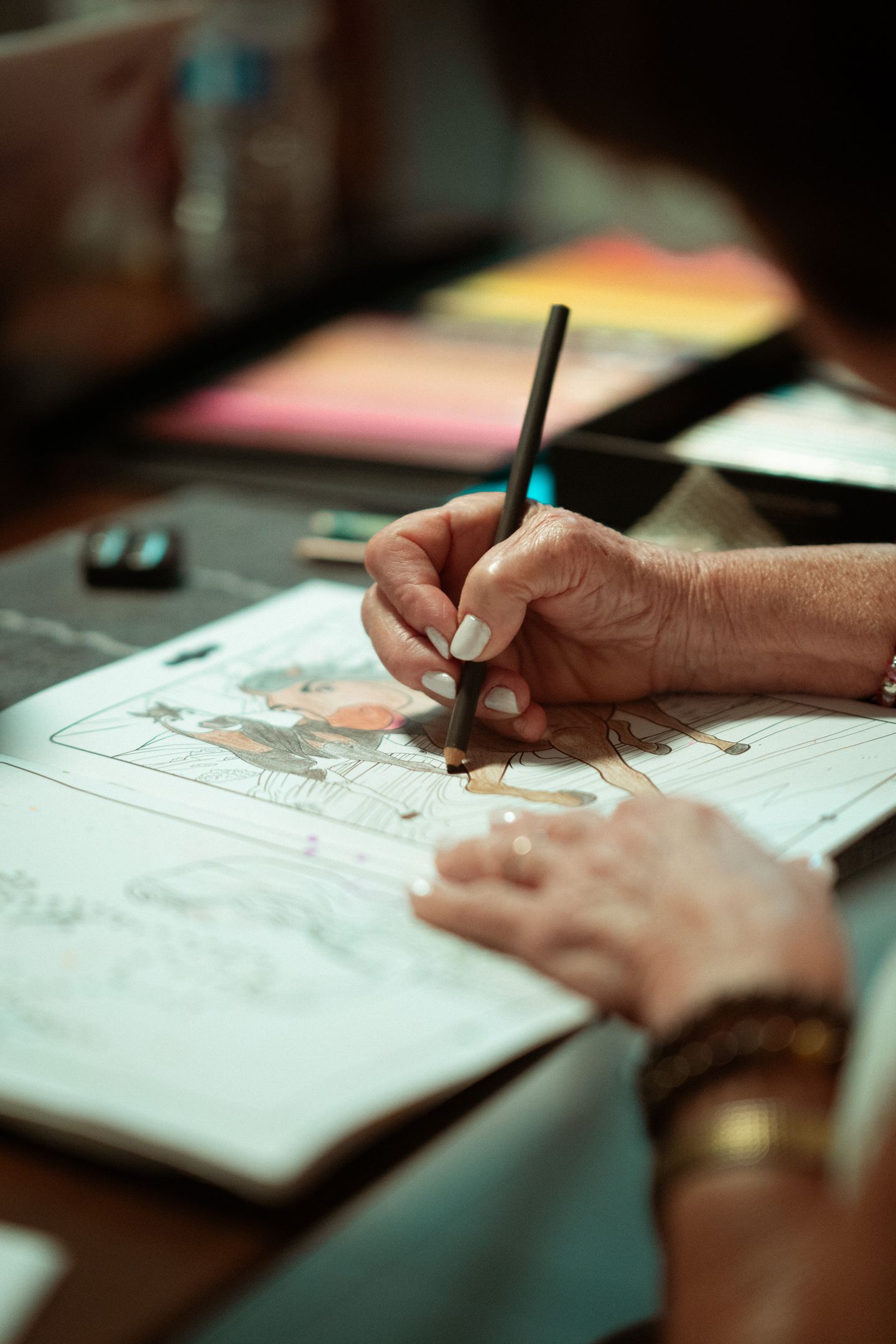
If you want to try coloring for stress relief, start with a small creative break rather than an elaborate routine. Put a page and a few tools within reach, choose somewhere comfortable, and give yourself permission to stop before the picture is finished.
Ten minutes is a convenient starting point. It is not a proven time to reduce anxiety, and the session does not need to leave you feeling transformed. The aim is to make room for an activity you might enjoy.
Choose a page that invites you in
Pick an image you like looking at. Large shapes can make the first marks straightforward; a detailed picture might be more appealing if you enjoy small decisions. Neither is the correct choice for everyone.
Avoid turning the choice into a search for the perfect relaxing page. One familiar picture is enough to begin. If you have plain paper instead, you can draw a few shapes and color those.
Use a page you own or have permission to print. Check license terms before copying a purchased file for someone else.
Keep the supplies small
Choose two or three pencils, crayons, or suitable markers you already have. Put the rest aside for now. You can add more colors later if you want them.
Sit somewhere with enough light to see the outlines without straining. Protect the surface if your tools may bleed or smudge. Keep a scrap of paper nearby for testing a color.
An inviting setup is one you can use easily. It does not need candles, special music, a matching pencil collection, or a photograph-worthy desk.
Try this flexible sequence
At the start: decide which small area you want to color first. Choose a color and test it on your scrap paper if you are unsure.
For the next few minutes: fill that area at a comfortable pace. Move to another shape when you want. You can repeat a color, leave a space empty, or change your plan.
Near the end: pause and decide whether to stop, continue, or save the page. If a timer helps you make space for the activity, use one. If a timer makes it feel like a task, leave it off.
The sequence is deliberately flexible. You do not need to complete a certain number of shapes or stay inside every line to have used the time well.
Notice the experience without scoring it
Ask a simple question afterward: “Did I enjoy any part of that?” You may have liked choosing colors, working with your hands, or spending less time on a screen.
You might also feel unchanged. That does not make the session a failure. A leisure activity can be worthwhile without producing a measurable wellness result.
Some studies suggest coloring can reduce reported anxiety in certain settings, but the evidence has limits. Our research explainer separates those findings from promises about treatment or guaranteed relief.
Adjust what feels demanding
If your hand becomes uncomfortable, pause or change the tool. If the pattern has too many tiny spaces, choose a simpler page. If choosing colors is the difficult part, use one color for a while.
If you catch yourself comparing the page with polished examples online, put those examples away. You are making something for your own experience, not completing an audition.
You can also stop coloring and try drawing, reading, or another activity you enjoy. Continuing is optional.
Make a return easy
Leave the page and a few tools together in a folder or small box. If you enjoyed the session, you can return when time allows. It does not have to become a daily streak.
For more ways to approach the page, try mindful coloring for beginners or our basic coloring tips. Choose the suggestion that makes starting easier, then let the picture develop at your own pace.