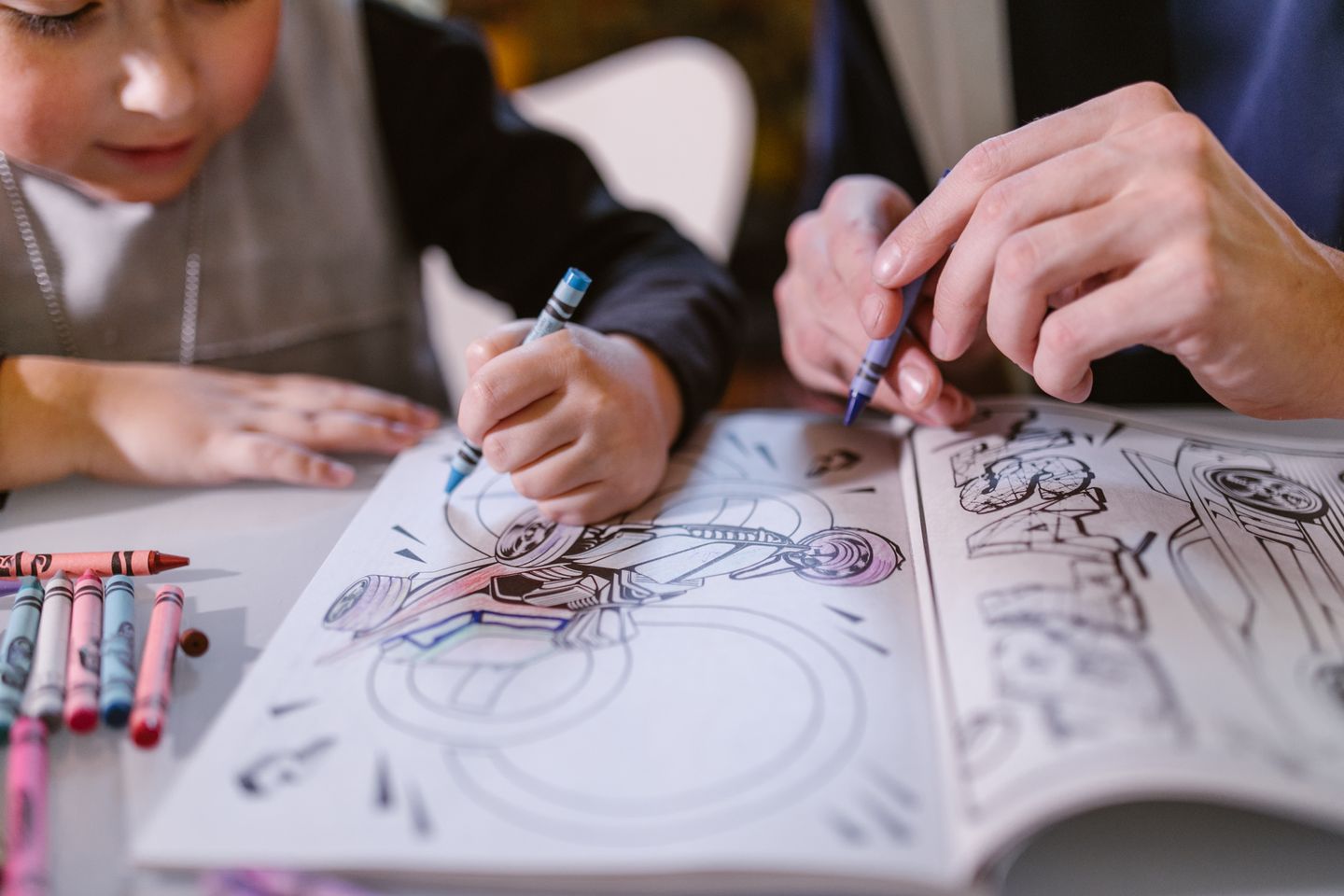
An animal coloring page can be a starting point for a story, a shared table activity, or a few minutes of independent play. You do not need a themed party or a cupboard full of supplies. Choose a page your child likes, put out suitable coloring tools, and offer one small idea.
Here are three screen-free coloring activities for kids that leave room for their own choices. Adapt them to your child's interest rather than aiming for a perfectly finished picture.
Start with a comfortable setup
Clear enough space for the page and a few tools. Choose materials suitable for your child's age, follow their safety instructions, and supervise as needed. Protect the table if you are using markers or anything messy.
Ask your child to choose between two pages rather than presenting a large pile. A familiar animal or a picture with large spaces may be an inviting place to start. Let them decide whether they want to color, make extra marks, or tell a story about the picture.
For a printable book, check its terms before printing copies for other people. Buying a PDF does not automatically give permission to distribute it. Our printing checklist explains how to check the file and preview a page before using more paper.
1. Give the animal a story
Invite your child to name the animal on the page. Then offer one question: “Where is it going today?” or “What would it like for a snack?”
They can color while answering, or make the story first and choose colors afterward. A purple animal could be visiting a purple planet; a green background could become a garden. There is no need to correct an imaginative color choice.
If questions interrupt their concentration, put the storytelling aside. Some children enjoy conversation while drawing, while others want time to work quietly. The activity can follow either preference.
2. Choose three colors together
Put out a small selection of pencils or crayons and choose three colors. Invite your child to decide which part of the page each color belongs to.
You can take turns selecting a color, but avoid turning this into a rule they must follow. If they want a fourth color, add one. The small palette simply makes the first decision manageable.
One playful option is to repeat the same color in three places: an animal's ears, a flower, and a patch of background. Another is to use different colors for similar shapes. Describe what you notice without ranking one version as better.
3. Share a quiet coloring table
Sit nearby with your own permitted page or a piece of drawing paper. Let your child see that grown-ups can make marks for enjoyment too.
Keep the invitation light: “I'm going to color for a little while. You can join me if you'd like.” A family activity does not have to mean everyone working on the same picture or staying for the same amount of time.
Try a short session first. Stop when interest fades, or leave the materials ready to return to later. A half-colored page is still something your child made.
When the activity does not hold their interest
Try a page with fewer small spaces, a different tool, or plain paper. Your child might prefer drawing their own animal to filling an existing outline. They may also prefer another kind of play that day.
Quiet time describes the setting you are offering; it is not a promise that coloring will make every child calm. Avoid using the activity as a test of sitting still, staying inside the lines, or managing feelings correctly.
Choosing an animal coloring book
Look at the intended audience, available previews, and file format before buying. Color Haven's Cute Animals Coloring Book is a digital PDF for young children, with 30 animal illustrations described as having simple, bold outlines. Purchase and delivery take place through Gumroad; no physical book or coloring tools are shipped.
Choose an activity you can offer without much preparation, then let the page become your child's own. If you want help getting started with supplies, see our beginner coloring tips.